Protocol: Optimization Benchmarks
The Physics of
Training Efficiency.
Raw TFLOPS are a marketing metric. Real-world neural network performance is a factor of memory bandwidth, thermal stability, and interconnect latency. We define the threshold for high-density compute.
Node-Level Telemetry
- VRAM Latency 0.42ms
- Thermal Delta +12°C RMS
- Bus Saturation 98.4%
Technical Rigor.
Our evaluation criteria prioritize the sustained throughput of neural network workloads over synthetic peak bursts. We measure the points of failure in the silicon-to-software stack to ensure your models train without interruption.
Metric: Power Density
Watts per Training Step
Total system energy consumption normalized against actual gradient descent operations. This exposes inefficient cooling or power delivery phases that steal budget from actual compute.
Metric: Thermal Inertia
Thermal Throttling Lead-Time
The duration an H100 or A100 cluster can maintain peak clock speeds under 100% duty cycle before environmental heat saturation forced frequency down-scaling.
Metric: Fabric Health
Interconnect Latency Under Load
Measuring jitter and packet collisions on NVLink or InfiniBand fabrics while multi-node model weights are synchronized. Standard benchmarks often ignore this congestion.
Metric: Driver Integrity
Driver Stability Validation
Cross-referencing performance drops and memory leaks across specific CUDA versions versus kernel optimizations. We identify the "golden version" for your specific architecture.
The DevCert Threshold.
Phase 01
Baselining & Stress
We subject representative nodes to a proprietary 48-hour stress protocol. Unlike generic burns, this test mimics the exact transformer-based memory access patterns used in modern LLM training.
- » FP8/FP16 numerical stability audit
- » ECC error rate monitoring under load
Phase 02
Topology Optimization
Analyzing the physical interconnect paths. We identify bottlenecked PCIe lanes, misconfigured NVLink bridges, and inefficient rack placement that leads to thermal cross-talk between nodes.
- » Inter-GPU latency mapping
- » Rack airflow vector analysis
Phase 03
Firmware Hardening
Applying low-level tweaks to the BIOS, kernel, and hardware power states. We aim to flatten the power curve, eliminating spikes that cause unstable training batches or mysterious node crashes.
- » Custom PCIe power delivery tuning
- » Idle overhead reduction
Fundamental Axiom
Architecture ist
Bestimmung.
Architecture is Destiny. In neural network training, yours is either optimized for massive throughput or destined for thermal throttling. There is no middle ground in high-performance computing.
Air vs. Liquid Cooling: The Reality.
01 Traditional Air Cooling
Air remains the standard for ease of maintenance. However, it requires significantly higher rack spacing (U-count), leading to lower node density and higher latency for all-reduce operations across distributed clusters.
02 Direct-to-Chip Liquid Cooling
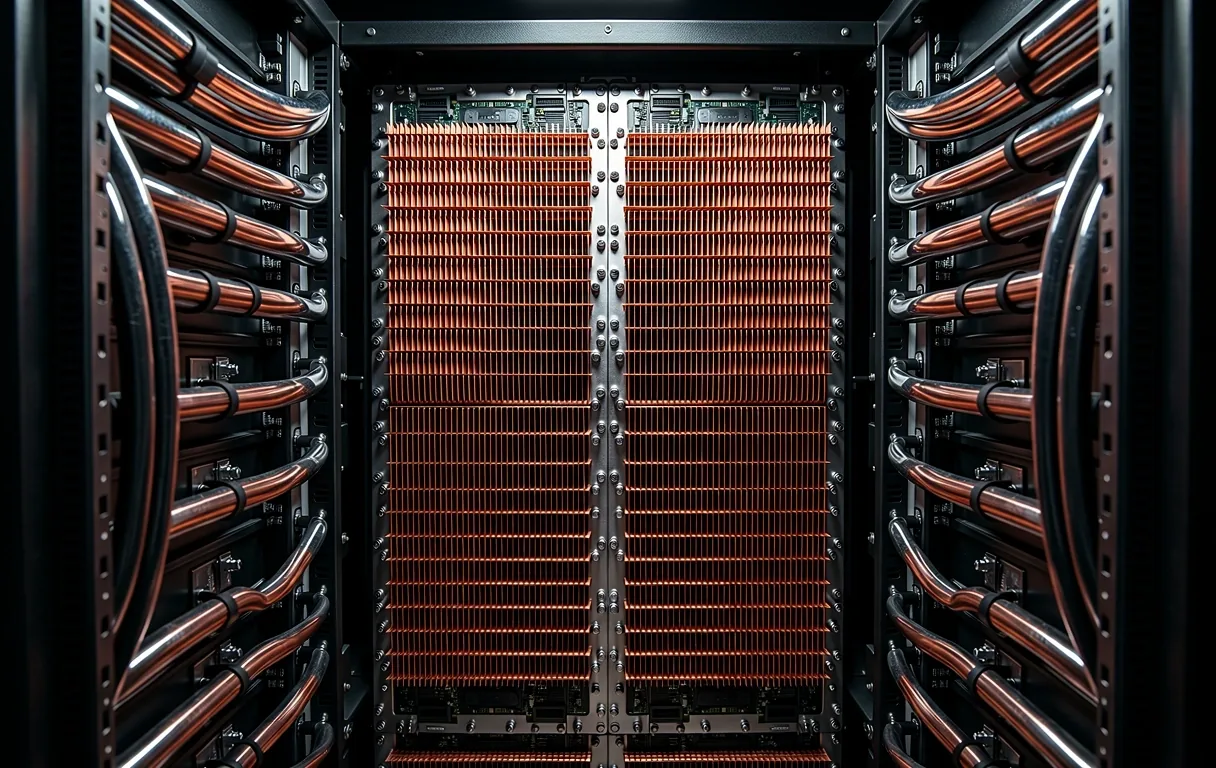
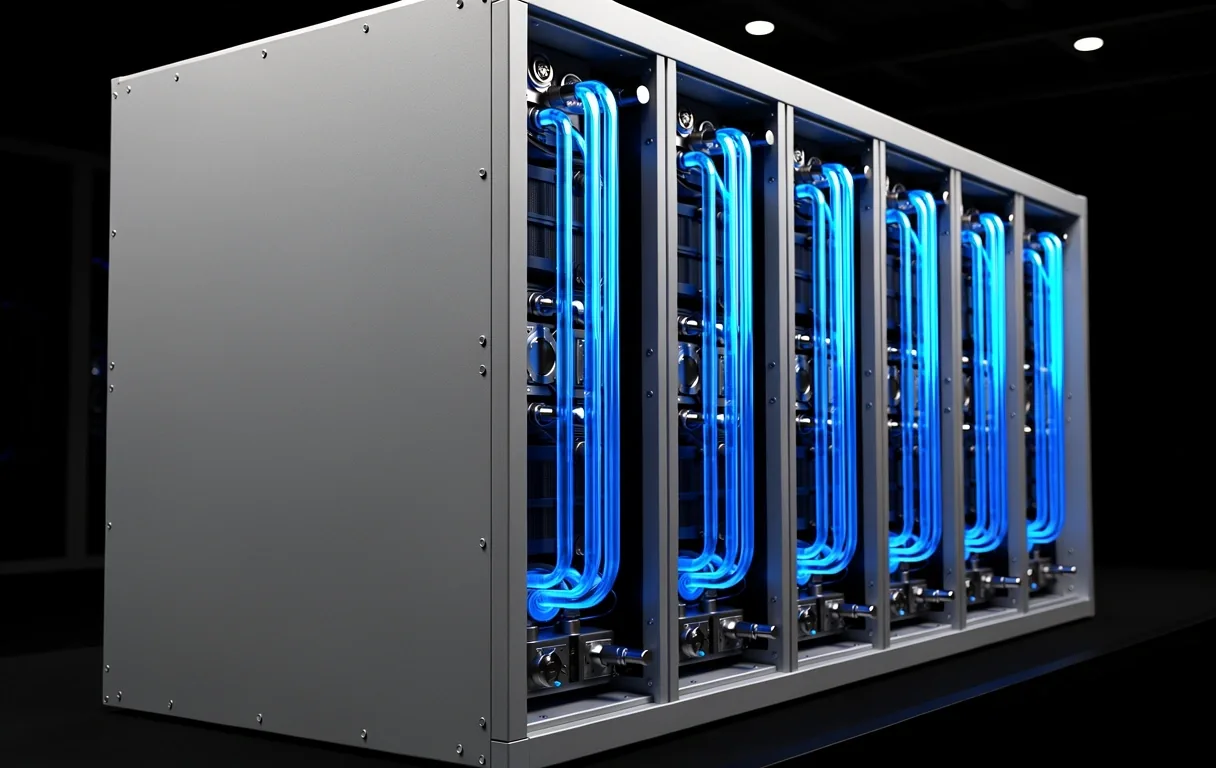
Mandatory for H100 arrays exceeding 40kW per rack. While maintenance overhead is higher, the thermal stability allows for sustained peak clock speeds without frequency oscillation during heavy backpropagation phases.
Decision Parameters.
Choosing the right thermal and power substrate depends on your current fleet size and your 24-month model scaling roadmap. We help you avoid the expensive "rip and replace" cycle.
Address: 1000 Rue Sherbrooke O, Montréal
DevCert Hardware Standards V.2026.06
Standard Operating Protocol
Phase 01: Baselining
We establish your current performance ceilings under laboratory-standard thermal loads. This includes logging every watt and every missed clock cycle. Prerequisite: Current hardware inventory plus last 30 days of power logs.
Phase 02: Bottleneck Identification
We utilize synthetic and real-world neural weights to find where your infrastructure "chokes"—whether it's the I/O bus, the local storage cache, or inter-node fabric congestion.
Phase 03: Implementation & Validation
Deployment of custom firmware, kernel flags, and physical relocation of nodes. We provide a final post-optimization report documenting the increase in stable tokens/sec per watt.
Maximize Every
Training Cycle.
Optimization is not a luxury; it is the difference between model success and infrastructure insolvency. Request your benchmarking report today.